
Do You Need a Permit for a Fence in Bergen County?
There is no single fence rule for Bergen County. Height limits and setbacks are set town by town, and the pool barrier requirement sits on top of both.
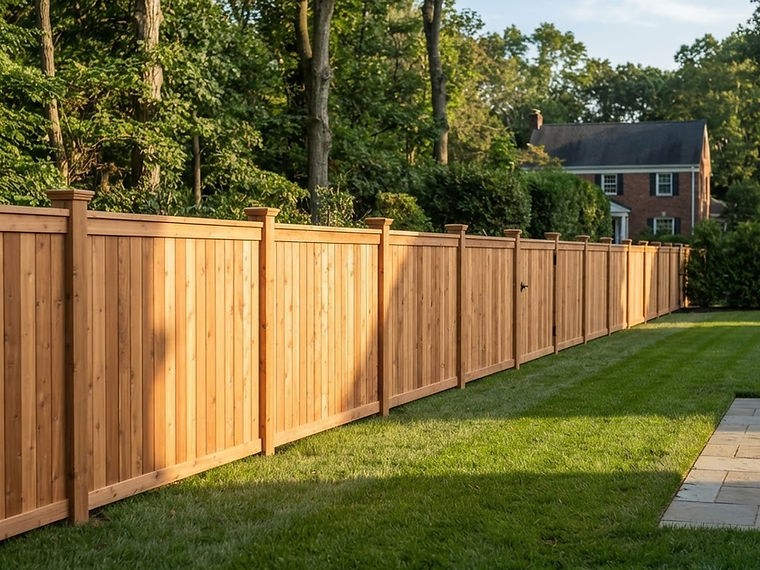
One of the most common assumptions we hear at an estimate is that Bergen County has a countywide fence code. It does not. Fence regulation in New Jersey is municipal, which means the rules that apply to a fence in Hackensack may not be the rules that apply to the same fence in Ridgewood or Tenafly.
That does not make the process difficult, but it does mean a fence that was perfectly legal two towns over is not automatically legal on your property. Here is what actually varies, what usually stays consistent, and what to confirm before anyone digs a post hole.
What Is Set by Your Municipality
Maximum fence height is the most commonly regulated item, and towns typically set different limits for front yards, side yards and rear yards. A fence that runs along a street frontage is usually held to a lower height than one enclosing a back yard, and corner lots frequently carry an additional restriction because sight lines for drivers matter.
Setbacks are the second variable. Many towns require a fence to sit some distance inside the property line, and that distance is often measured differently for a side yard than for a rear yard. Some municipalities also regulate the finished side of the fence, requiring the smoother face to point outward toward neighbors or the street.
Material and style restrictions exist in a smaller number of towns, and they are more common in designated historic districts. If your property sits in one, confirm the district rules before choosing a fence system.
- Maximum height, often different for front, side and rear yards
- Minimum setback from the property line, measured yard by yard
- Finished-side orientation requirements in some towns
- Sight line restrictions on corner lots
- Historic district material and style limitations where applicable
When a Permit Is Usually Required
Whether a permit is required at all is a municipal decision, and the answer varies across the county. Some towns require a permit and an inspection for essentially any new fence. Others require one only above a certain height, or only where the fence is in front of the house. Some require no permit for a like-for-like replacement in the same footprint.
The practical rule we give clients is this: if the work involves new excavation, a change in height, a change in location, or anything within the public right of way, assume a permit may be needed and confirm it with your construction office. A quick phone call or a look at the town website settles it in a few minutes.
Permits are ordinarily the property owner's responsibility, but we build to the approved plan and we are happy to provide the spec sheets, material details and drawings that most towns ask for with an application.
The Pool Barrier Requirement Sits on Top of Everything
If a property has a swimming pool, a separate and stricter set of state requirements applies, and these are not optional or negotiable. New Jersey requires a barrier around a pool that meets a minimum height, restricts how much clearance exists beneath the fence, and blocks climbing by limiting horizontal elements that could act as footholds.
The gate is where most pool barriers fail inspection. It must be self-closing and self-latching, and the latch must be positioned high enough that a small child cannot reach it from outside the enclosure. A gate that no longer swings shut on its own is not a minor annoyance on a pool fence, it is a compliance problem.
We treat pool barrier repair as a priority for that reason. It is one of the few categories of fence work where getting it wrong has real safety consequences rather than just an aesthetic one.
Property Lines, Surveys and Good Neighbors
The most expensive fence mistake is not a permit issue, it is a survey issue. Fences built on a neighbor's property or across an easement can have to be removed, and removing a fence and repouring footings costs considerably more than establishing the line correctly the first time.
If the fence will reuse the exact footprint of an existing fence and you are confident where the line sits, the risk is low. If you are replacing a fence that was installed before you owned the property, or if the line has never been surveyed, having it confirmed before excavation is cheap insurance.
Easements are the other thing to check. Utility easements and drainage easements may sit inside your property lines, and a fence placed in one can be required to come out later if the utility needs access.
How We Handle It During an Estimate
We walk the property, identify what your town is likely to require for the specific fence you want, and flag anything that needs confirmation before we schedule work. If a proposed height or location looks like it will trigger a permit or a variance, we tell you at the estimate stage rather than after materials are ordered.
For pool fences, we build to the state barrier requirements as standard practice rather than as an upgrade. For anything in a right of way, we tell you up front so you can talk to your town before a post hole is dug in the wrong place.
Common questions
Related guides

 Fence Installation
Cedar, Vinyl or Aluminum: Choosing a Fence Material in New Jersey
The right fence material is the one that matches how you will actually use the yard and how much maintenance you are willing to do. Here is the honest comparison.
Read Article
 Fence Repair
Why Fence Posts Lean After Winter
A post that leans after a hard winter is telling you about the ground, not the fence. Here is what actually happens below grade and what fixes it for good.
Read Article
 Hiring & Planning
How to Vet a Fence or Construction Contractor in Northern NJ
Most of the difference between a good and a bad contractor shows up in the quote and in two questions you can ask before anyone digs a hole.
Read ArticleSchedule an on-site visit
We serve every Bergen County community plus Passaic, Morris, Essex, Hudson, Hunterdon, Somerset and Union County, and the New York metro area.
Built to outlast the weather
Custom fencing and exterior construction for Northern New Jersey, backed by a written workmanship warranty and two decades in the same communities.