
Brick Paver Installation in Montclair, New Jersey
Patios, walkways, driveways and pool surrounds laid on a properly excavated base with tight, stable joints.

- Typical Work
- Patios, walkways, drives
- Base
- Excavated & compacted in lifts
- Joints
- Polymeric sand
Montclair has some of the most distinctive residential architecture in Essex County, and a large part of that character lives in the hardscape: brick walkways, bluestone stoops, patterned front entries and garden paths that were laid out generations ago. When one of those surfaces fails, or when a homeowner wants a patio that belongs to a house of this vintage, the material choice matters as much as the installation.
City Fence LLC installs brick pavers and concrete pavers throughout Montclair for patios, walkways, driveways, pool surrounds and garden paths. We also build retaining walls and concrete work, which matters on Montclair's sloped streets where a patio usually needs a grade change solved before it can be laid at all. This page explains how we approach paver work here specifically, why the base and edge restraint determine whether the surface lasts, and how patterns and materials are chosen for the house rather than from a catalog.
Why Montclair Paver Surfaces Fail
The paver itself almost never fails. What fails is everything around it. The most common problem we are called to repair in Montclair is a paver surface that has rippled, rutted or spread outward at the edges, and in nearly every case the cause is a base that was too shallow for the application, a base that was not compacted, or the absence of proper edge restraint.
Montclair's terrain adds a second cause: water from uphill lots and from roof drainage that was never redirected. A paver surface sitting in the path of concentrated runoff will lose its bedding layer over time as the sand washes out from the joints and the surface begins to move. Because individual pavers can be lifted and reset, a failing paver surface is usually repairable, but the repair only holds if the underlying base and drainage problem is corrected at the same time.
Base Depth and Edge Restraint
Base depth is set by what the surface must carry, and this is where most installations cut corners. A garden path carrying foot traffic needs far less base than a driveway taking a loaded vehicle, and building a driveway on a walkway's base is exactly how paver driveways end up rutted in the wheel tracks within a couple of years. We excavate to the required depth, compact the crushed stone in shallow lifts, and screed the bedding layer to the exact final plane.
Edge restraint is the other half of the equation, and it is the detail most often left out. Pavers are a locked field, and a field stays locked only if its perimeter cannot move. We install rigid edge restraint or a soldier course around the entire perimeter and pin it properly, because a surface that loses its edge opens at the joints and creeps outward one row at a time. In our experience the presence of proper edge restraint is the single best predictor of whether a paver installation still looks new after ten years.
- Base excavated to application-specific depth, foot traffic or vehicle load
- Crushed stone compacted in shallow lifts rather than a single pass
- Bedding layer screeded to the exact final plane
- Rigid edge restraint or soldier course pinned around the full perimeter
- Drainage path considered before the base is built, not after
Patterns and Layout for Older Homes
Pattern choice is where the design work actually happens, and on a house of Montclair's vintage it deserves real thought. Running bond reads calm and traditional and suits a formal front walk. Herringbone locks a surface tightly and handles vehicle turning well, which makes it a natural for driveways. Basketweave gives a patio a structured, deliberate character. A contrasting border is a practical way to define an area, and it is also how you transition from a walkway to a patio without an abrupt material change.
We set out the layout on the ground before anything is laid so you can see where the pattern lands relative to the house, the steps and the planting beds. That step exists to prevent the most common eyesore in paver work: a cut row of narrow slivers running along a visible edge. Adjusting the layout by a few inches ahead of time usually means the pattern begins and finishes with full or near-full pieces, and the difference in the finished result is substantial.
Polymeric Sand and Joint Stability
Joint sand is what keeps a paver surface rigid. Ordinary sand washes out within a couple of seasons, leaving open joints that gather weeds, host insects and allow individual pavers to move independently of their neighbors. Polymeric sand is swept into the joints and then activated with water so it cures into a firm, slightly flexible material that resists washout and blocks weed growth.
Application matters as much as the product itself. Joints must be filled completely and consistently, the surface must be cleaned of residue before activation, and the water must be applied so it penetrates the full depth of the joint rather than wetting only the top. Done correctly, polymeric joints stay tight for years and the paver field behaves as a single, continuous surface. We also advise on sealing intervals, which further protect the color and the stability of the surface.
Paver Patios on Sloped and Tight Lots
Montclair lots are frequently both sloped and tight, and patios on those properties need more planning than a patio on flat ground. A sloped back yard usually means part of the design is a retaining wall or a set of steps, because a patio needs a level footprint to sit on. We build the grade change and the paver surface as one project so the wall, the steps and the patio all resolve to the same finished level rather than being built by separate trades who never met.
Tight side yards and narrow gaps between houses create a second set of constraints, mostly around access. Materials have to be moved through a side gate, sometimes by hand, and excavated soil has to come out the same way. We plan that sequence in advance because it affects both the schedule and the cost. Where access is genuinely restricted we will tell you before you commit, so the quote reflects the reality of the site rather than an optimistic assumption.
Repairing Pavers That Have Moved
One of the genuine advantages of pavers over a poured surface is repairability. If a section has settled, or a utility line needs to be dug up, or a few units are chipped, the individual pieces can be lifted and reset without leaving a visible scar. That is a meaningful benefit over concrete, where a cracked slab means replacing a whole panel and hoping the new one matches once it cures.
Repairing a moved paver surface properly means correcting what caused the movement, not just relaying the units. We lift the affected area, examine the base and bedding layer, address any base defect or drainage issue we find, re-compact, and reset the pavers on fresh bedding with joint sand reinstated. Where the original edge restraint is missing or has failed, it is installed as part of the repair, because otherwise the surface will simply spread again.
Materials for Montclair Properties
Clay brick pavers hold their color with exceptional stability and develop a rich, natural surface over time, which makes them a natural fit for the brick architecture common in Montclair. Concrete pavers offer a much wider range of colors, textures and sizes, with dimensions consistent enough to execute intricate patterns and borders cleanly. Natural stone and travertine stay cooler underfoot and suit pool surrounds, where surface temperature actually matters in summer.
The right choice usually comes down to how the surface needs to relate to the house. If the goal is a walkway that reads as though it belongs to a brick facade, clay brick in the correct tone is hard to improve on. If the goal is a patio with a strong geometric pattern and a specific color, concrete pavers give you far more control. We bring samples to the estimate so the comparison happens in your own light rather than in a showroom.
Brick Pavers for Montclair properties
Brick paver installation for patios, walkways, and driveways, offering strength, functionality, and a clean finish. Read the full brick pavers page for materials, methods and detailed answers.
Brick PaversMontclair questions
What we build in Montclair
We handle the following work for Montclair homeowners and businesses. Each service has its own page with materials, process and code details.

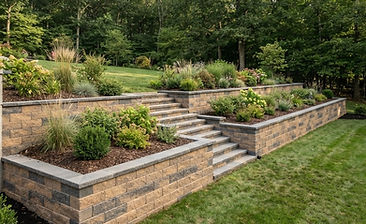 01
Retaining Walls
Retaining wall construction designed to control erosion, support landscaping, and improve the structure and appearance of outdoor spaces.
View Service
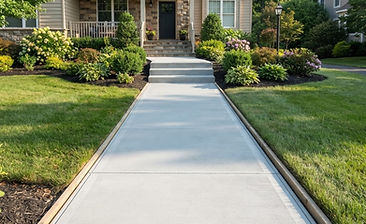 02
Concrete Sidewalks
Concrete sidewalk installation built for safety, longevity, and compliance with local standards.
View Service
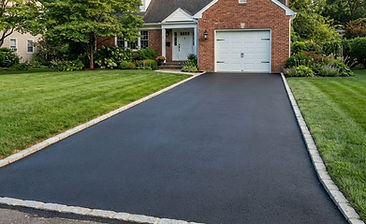 03
Asphalt Driveways
Asphalt driveway installation services focused on durability, proper grading, and long-term performance.
View ServiceRelated work in neighboring towns
Wayne, NJ
Passaic County
Engineered retaining walls and terraced grade changes built for Wayne's sloped and lakefront properties.
Ridgewood, NJ
Bergen County
Exterior construction across Ridgewood: retaining walls, driveways, sidewalks and pavers, built on real base and drainage.
Parsippany, NJ
Morris County
Concrete sidewalk replacement and repair in Parsippany, including lifted panels and trip hazards.
Schedule an on-site visit
We come out, walk the property, check the grade and measure the actual dimensions before quoting. Serving Montclair and the rest of Essex County since 2006.
Brick Pavers in Montclair, done properly
Tell us what you are building, repairing or replacing in Montclair. We will walk the property, measure the actual run and give you a written quote with no obligation.