
Concrete Sidewalks in Parsippany, New Jersey
Sidewalk replacement, new walkways and step work formed straight, jointed correctly and poured to survive the winter.

- Typical Work
- Replacement & repair
- Common Cause
- Tree roots & freeze-thaw
- Compliance
- Built to municipal standards
Parsippany's residential subdivisions were largely built between the 1960s and the 1980s, which means a substantial number of the sidewalks and walkways across this township are now forty to sixty years old and reaching the end of their service life. Combined with mature street trees lifting panels from below and decades of winter salt exposure, that produces a lot of heaved, cracked and scaling concrete, along with the trip hazards that come with it.
City Fence LLC installs, replaces and repairs concrete sidewalks, walkways, steps and entry aprons throughout Parsippany and Morris County. We work on residential, commercial and municipal properties, which matters here because so much of the township's frontage is commercial and because sidewalk work in the public right of way is subject to municipal standards and inspection. This page explains why Parsippany concrete fails the way it does, what correct installation involves, and when a single panel can be replaced rather than an entire run.
Why Parsippany Concrete Fails
Concrete failures in Parsippany follow a pattern that repeats street after street. The most visible is a heaved panel, a slab tilted upward at one corner so the joints no longer line up. Under a street tree, the cause is almost always roots, which grow beneath a sidewalk and lift it from below with no way to stop. Away from trees, the cause is freeze-thaw: water enters the soil beneath a slab that was never pitched properly, freezes, expands, and lifts the panel a fraction of an inch per winter until the change is unmistakable.
The second pattern is surface scaling and spalling, where the top layer flakes away and leaves a rough, deteriorating surface. This is usually a mix problem rather than a movement problem. Concrete without adequate air entrainment has no room for the water inside it to expand when it freezes, so the surface breaks apart from within. In a region that salts heavily and freezes repeatedly, an air-entrained mix is not a detail, it is the difference between a sidewalk that lasts thirty years and one that lasts five.
Forming for Straight Lines and Proper Pitch
The quality of a sidewalk is largely decided before any concrete arrives. We set forms to the correct width and hold a true line along the entire run, then establish the pitch so water leaves the surface rather than standing on it. A walk that is level rather than pitched will pond after every rain, and standing water is what scales and cracks concrete through the winter.
Before pouring we confirm the base condition: a compacted, uniformly graded granular layer that will not settle unevenly. Concrete panels move as a single unit, so a void beneath one of them becomes a crack or a heaved slab rather than a localized dip. On replacements we remove the failing concrete and the unstable material beneath it instead of pouring a thin new surface over an existing problem, which is a shortcut that fails within a season.
- Forms set for correct width and a straight, true line
- Pitch established so water leaves the surface rather than ponding
- Compacted granular base verified before any concrete is placed
- Existing concrete and unstable material fully removed on replacements
- Edges finished clean and consistent along the full length
Joints: Controlling Where Concrete Cracks
Concrete shrinks as it cures and it will crack; there is no way to prevent that. The goal is to control where the crack appears. Control joints are tooled or cut at planned intervals so the shrinkage crack forms inside a joint where it is invisible rather than wandering diagonally across the middle of a panel. Joint spacing is determined by slab thickness and geometry rather than by habit.
Expansion joints serve a different purpose. Placed where the walk meets steps, walls, existing slabs, or a driveway apron, they give the concrete room to move without pushing against something rigid and hard. Missing expansion joints are one of the most common reasons a new walk pushes into an old stoop and cracks both. We also protect fresh concrete from drying too quickly, because surface crusting and early random cracking in the first hours after placement come from curing too fast rather than from any problem with the mix.
Municipal and Accessibility Requirements
Sidewalks in the public right of way are generally governed by the municipality, and requirements for width, slab thickness, joint spacing and materials differ from town to town. In Parsippany, work in the right of way commonly requires a permit and an inspection before and after the pour. We build to those standards and sequence the work so it passes inspection without a return visit.
Accessibility is the other consideration, and it is often overlooked until a problem surfaces. Where a sidewalk meets a driveway or a curb, the transition has to remain usable and properly sloped. A heaved panel that creates a lip is not only a trip hazard, it can expose a property owner to liability, particularly on commercial frontage. When we repair walkways we look at the whole route rather than just the panel that was reported, because a repaired section leading directly into a bad one fixes nothing.
Replacing Individual Panels Versus Entire Runs
A great deal of the concrete work we do in Parsippany is single-panel replacement, and it is often the sensible answer. If one slab has heaved, cracked or spalled while the panels around it are sound, replacing that section restores the walk for a fraction of the cost of a full tear-out. We match the thickness, finish and joint layout of the surrounding concrete so the repair does not advertise itself.
A full run is usually the better call when the failure is systemic. If every panel along a stretch has lifted, if the subgrade beneath the whole walk has failed, or if the mix was deficient and the surface is scaling across its entire length, panel-by-panel replacement becomes expensive without ever solving the underlying problem. We assess the run during the estimate and tell you honestly which category you are in, including where a partial replacement would leave you with a mismatched surface that fails again within a few years.
Steps, Stoop Repairs and Entry Walkways
Steps and stoops are where concrete work gets more demanding. A step that is out of level or has a tread depth that varies by even an inch becomes a fall risk, and unlike a sidewalk, a bad step is used by every visitor to the property. We form steps to consistent rise and run, give each tread the slight outward pitch it needs to shed water, and integrate steps with the walkway so the whole approach reads as one piece.
Steps also take more weather than flatwork, because they present vertical surfaces where water sits and freezes. That makes air-entrained mix, proper curing and correct jointing even more important at a stoop than on a flat walk. Where an existing concrete stoop is structurally sound but cosmetically worn, we can sometimes resurface rather than rebuild, and we will tell you if that is a realistic option or just a way of deferring a replacement.
Cold Weather and Timing Your Project
Concrete placed in cold weather behaves differently, and the schedule has to respect that. Fresh concrete that freezes before gaining strength is permanently damaged, so cold-weather placement requires careful mix temperature, protection after pouring, and sometimes accelerators or insulating blankets. We plan exterior concrete work around the season rather than forcing it into a date that suits a schedule.
If conditions are marginal we will say so and recommend a time when the work can be done properly, because a sidewalk poured a week too early in November is usually a sidewalk you are replacing within two years. In summer we manage the opposite risk, protecting the slab from drying out too fast in direct sun and heat. Where a repair cannot wait for ideal weather, we discuss temporary measures that keep the walkway safe in the meantime.
Concrete Sidewalks for Parsippany properties
Concrete sidewalk installation built for safety, longevity, and compliance with local standards. Read the full concrete sidewalks page for materials, methods and detailed answers.
Concrete SidewalksParsippany questions
What we build in Parsippany
We handle the following work for Parsippany homeowners and businesses. Each service has its own page with materials, process and code details.

 01
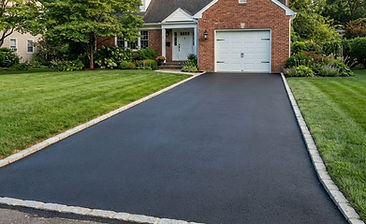
Asphalt Driveways
Asphalt driveway installation services focused on durability, proper grading, and long-term performance.
View Service
 02
Brick Pavers
Brick paver installation for patios, walkways, and driveways, offering strength, functionality, and a clean finish.
View Service
 03
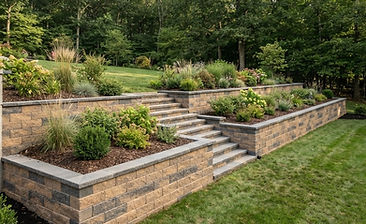
Retaining Walls
Retaining wall construction designed to control erosion, support landscaping, and improve the structure and appearance of outdoor spaces.
View ServiceRelated work in neighboring towns
Clifton, NJ
Passaic County
Asphalt driveway installation in Clifton built on proper base, with grading designed for real water flow.
Wayne, NJ
Passaic County
Engineered retaining walls and terraced grade changes built for Wayne's sloped and lakefront properties.
Montclair, NJ
Essex County
Brick and concrete paver patios, walkways and driveways for Montclair's older homes and tight lots.
Schedule an on-site visit
We come out, walk the property, check the grade and measure the actual dimensions before quoting. Serving Parsippany and the rest of Morris County since 2006.
Concrete Sidewalks in Parsippany, done properly
Tell us what you are building, repairing or replacing in Parsippany. We will walk the property, measure the actual run and give you a written quote with no obligation.