
Asphalt Driveways in Clifton, New Jersey
Correct sub-base, real compaction and grading that sends water where it belongs instead of into your driveway.

- Focus
- Driveways & aprons
- Base
- Compacted stone in lifts
- Drainage
- Designed, not discovered
Clifton is a city of driveways. Between the older single-family homes, the two-family properties that share a single curb cut, and the commercial frontage along the main corridors, a great deal of this town's exterior surface is asphalt, and a great deal of it is failing. The reasons are consistent: a base that was never built to carry the traffic, no plan for where water goes, and asphalt placed in conditions it was never going to survive.
City Fence LLC installs and replaces asphalt driveways throughout Clifton and the surrounding Passaic County communities. We excavate to a stable subgrade, build a properly graded and compacted stone base, and place hot mix asphalt at the right thickness in the right temperature conditions. This page explains why Clifton driveways fail the way they do, what a correct installation actually involves, and how to get the longest life out of the surface once it is in.
Why Clifton Driveways Fail
Clifton driveways fail from beneath. The asphalt surface is the visible part, but the stone base, the compaction and the grading under it determine whether the driveway is smooth in ten years or a web of cracks with water standing in the low spots. When the base is too thin, or built over soil that was never removed, it settles unevenly under load and the surface above it follows.
Water does the rest. Clifton's older neighborhoods have driveways that were laid out when the streets had different crown and drainage than they do now, and a great many of them slope gently toward the house or the garage rather than away. Stormwater collects in the low spot, seeps into the asphalt, and then freezes. Ice occupies more volume than the water it came from, so every freeze widens every crack it sits in. After three or four winters, a driveway with a drainage problem stops being a surface problem and becomes a replacement.
Excavation and Base Preparation
The first step on any driveway is establishing what is underneath. If the existing subgrade contains soft, organic or otherwise unsuitable material, it comes out; paving over it simply transfers the failure to the new surface. On fine-grained or unstable soils we separate the base from the subgrade with geotextile fabric, which keeps the stone from migrating downward and preserves base thickness over the life of the driveway.
We then build crushed stone in layers and compact each one rather than placing the full base depth and compacting the top. Compaction in lifts is slower work and it is the difference between a base that is dense throughout and one that is only dense where the roller touched it. Base thickness is set by what will actually use the driveway: a passenger car, a delivery truck, or a contractor's loaded trailer are three different requirements, and we specify for the real load rather than applying one depth to everything.
- Existing subgrade evaluated and unsuitable material removed
- Geotextile separation fabric on fine-grained or unstable soils
- Crushed stone base compacted in lifts, not in a single pass
- Base thickness specified for the actual traffic load
- Grading established before any asphalt is placed
Grading, Aprons and Where the Water Goes
Driveway failures in Northern New Jersey are usually drainage failures. Our design goal is simple: get water off the surface and away from the foundation as quickly as possible. That means setting the correct longitudinal and cross slope, planning the apron transition at the street so the driveway meets the road without a lip or a low point, and detailing the garage threshold so runoff cannot run in under the door.
Clifton's shared curb cuts and narrow lots make the apron detail especially important. The apron is where the driveway meets municipal asphalt, and it is the point most likely to be undercut by water running along the gutter. Where runoff from an uphill area arrives at the driveway, we intercept it with a swale or diversion rather than letting it cross the surface. Where a driveway genuinely slopes toward a garage, a trench drain at the threshold is sometimes the honest answer, and we will say so rather than pretending a repaving job solves a water problem.
Placement and Compaction of the Asphalt
Asphalt performance is largely decided in the hour it is placed. The mix has to arrive hot, be raked or screeded to the correct profile, and be compacted immediately with a roller matched to the work. Temperature matters far more than most homeowners realize: asphalt placed too cold never achieves proper density and stays porous for its entire service life, while asphalt placed too thin cracks under vehicle load regardless of how good the base is.
Compaction is what closes the surface and locks the aggregate together into a dense mat. We check for segregation, where the larger stones separate from the mix and leave a coarse, weak patch, and we check the finished grade to confirm the surface still sheds water the way it was designed to. If conditions on the day are wrong for paving, we reschedule rather than force the work and hand you a driveway that will not last.
Sealing and Making An Asphalt Driveway Last
New asphalt needs time before it is sealed, typically several months of curing, and sealing it too early traps the oils that need to evaporate and can leave the surface soft. Once cured, sealing at sensible intervals protects the surface from water penetration and from the oxidation that turns asphalt grey and brittle. Sealing on an appropriate schedule is protective; sealing every year is simply expensive.
There are also things you control. Keeping heavy loads off the edges, avoiding turning the steering wheel while stationary on a hot day, and clearing snow with a plastic-edged blade rather than a metal one all extend the life of the surface. Salt is hard on asphalt in a region that uses a great deal of it, and where a driveway crosses a public sidewalk it is worth keeping the joints clear so water does not sit at the transition. When we finish a driveway we walk you through realistic maintenance, including when to seal and what the first winter will look like.
Resurfacing Versus Full Replacement
An overlay is cheaper and faster than a rebuild, and sometimes it is genuinely the right answer. If the existing surface is structurally sound, the base is stable and the failures are confined to the surface layer, resurfacing over a properly prepared and tack-coated surface can add years of life for a fraction of the cost.
Resurfacing over a failing base is a different proposition entirely. It transfers the failure upward, and the new surface develops the same cracking and rutting as the old one within a season or two. We assess the existing driveway during the estimate, look at the base condition and the drainage pattern, and tell you honestly which category your driveway falls into. If an overlay will not last, we would rather say so than take the job and be back in two years.
Driveway Edges, Curbs and Transitions
The edges of a driveway take more abuse than the middle. That is where the asphalt is thinnest, where water runs off, and where tires cross when a vehicle pulls in at an angle. When an edge is unsupported, the asphalt at that point ravels and breaks away, and once the edge has gone the failure starts creeping inward toward the wheel tracks.
We detail the edges deliberately, whether that means tying into existing curbing, installing edging or stone, or building up the base under the edge so the asphalt has something to sit on. Transitions matter just as much: the apron where the driveway meets the street, the joint where asphalt meets a concrete garage apron, and any crossing where the driveway passes over a sidewalk. Those are the points where a driveway visibly ages first, and they are worth getting right on the installation rather than repairing later.
What an Estimate Involves
We quote driveways after seeing the site, because the two variables that drive cost, base condition and drainage, cannot be assessed from a phone description. On site we examine the existing surface, probe or open the base where the condition is unclear, and trace where water currently travels across the driveway and where it needs to go afterward. We measure the actual dimensions rather than estimating the square footage.
Your written proposal itemizes removal and disposal, excavation, base material, geotextile where used, asphalt placement and compaction, edge detailing, and cleanup. Optional items such as a trench drain or an apron rebuild are quoted separately so the effect on the total price is visible. Most residential driveways are completed in a few days, with cure time afterward before regular vehicle traffic, and we give you a specific timeline for your surface.
Asphalt Driveways for Clifton properties
Asphalt driveway installation services focused on durability, proper grading, and long-term performance. Read the full asphalt driveways page for materials, methods and detailed answers.
Asphalt DrivewaysClifton questions
What we build in Clifton
We handle the following work for Clifton homeowners and businesses. Each service has its own page with materials, process and code details.

 01
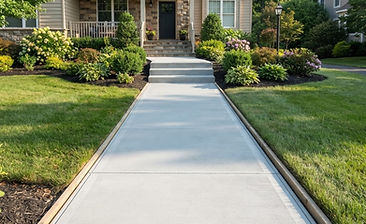
Concrete Sidewalks
Concrete sidewalk installation built for safety, longevity, and compliance with local standards.
View Service
 02
Brick Pavers
Brick paver installation for patios, walkways, and driveways, offering strength, functionality, and a clean finish.
View Service
 03
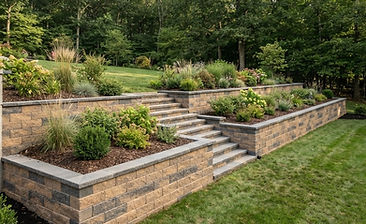
Retaining Walls
Retaining wall construction designed to control erosion, support landscaping, and improve the structure and appearance of outdoor spaces.
View ServiceRelated work in neighboring towns
Parsippany, NJ
Morris County
Concrete sidewalk replacement and repair in Parsippany, including lifted panels and trip hazards.
Wayne, NJ
Passaic County
Engineered retaining walls and terraced grade changes built for Wayne's sloped and lakefront properties.
Ridgewood, NJ
Bergen County
Exterior construction across Ridgewood: retaining walls, driveways, sidewalks and pavers, built on real base and drainage.
Schedule an on-site visit
We come out, walk the property, check the grade and measure the actual dimensions before quoting. Serving Clifton and the rest of Passaic County since 2006.
Asphalt Driveways in Clifton, done properly
Tell us what you are building, repairing or replacing in Clifton. We will walk the property, measure the actual run and give you a written quote with no obligation.