
Fence Installation in Fort Lee, New Jersey
Custom fencing built for steep terrain, tight property lines and access that has to be planned before the first post hole.

- Terrain
- Steep Palisades lots
- Access
- Planned up front
- Systems
- All six materials
Fort Lee is one of the most difficult places in Bergen County to build a fence. The borough sits on the Palisades, so many lots climb steeply away from the street, property lines run close to neighboring buildings, and access to a back yard is often a narrow set of steps rather than a driveway. Materials that would be delivered and stacked on a normal job have to be carried in by hand, and soil excavated from a post hole has to be carried back out the same way.
City Fence LLC installs every major fence system throughout Fort Lee, including wood, vinyl, chain link, aluminum, steel and wrought iron. Because we also build retaining walls and concrete work, we can solve the grade change that a fence line has to follow rather than working around it. This page explains what fence installation involves on Fort Lee's terrain, why footings and slope handling matter more here than almost anywhere, and how we plan access so a difficult site does not become a surprise on the invoice.
Building Fences on Steep Fort Lee Lots
A slope changes how a fence is built. A fence installed level along a steep grade will leave large gaps beneath the bottom rail, and a fence installed parallel to the grade will have a top line that climbs and drops like a staircase, which looks wrong from every angle. The correct approach is a compromise: step the panels in level sections so each section is true, while following the grade along the bottom so the gaps stay consistent and reasonable.
On the steeper lots in Fort Lee we plan that stepping before the first hole is dug, mapping where each section begins and ends and how much grade each one spans. Stepped fences also place different loads on different posts, because a panel that has to hold a greater vertical change puts more tension into its frame. Those posts get deeper footings and additional bracing so the whole run stays aligned rather than developing a lean at one step.
- Panels stepped in level sections to follow a steep grade cleanly
- Step layout planned before excavation rather than improvised on site
- Deeper footings and extra bracing at high-step and corner posts
- Bottom gaps kept consistent so no section looks unfinished
- Grade change solved with a wall where the slope makes fencing impractical
Footings That Hold on Sloped Ground
Sloped ground is harder on footings than flat ground, because water moves across a slope rather than soaking in evenly, and the soil on a bank is frequently less stable than the soil on a lawn. A post set into fill material on a slope is a post that will move. We excavate to solid, undisturbed soil where the bank has been built up, and where the grade is genuinely unstable we discuss a retaining structure instead of a fence, because a fence cannot be expected to hold back a slope that is actively moving.
Every footing is dug below the local frost line and set in concrete, with the hole widened at the bottom so the concrete keys into the surrounding soil rather than sitting in a smooth cylinder that can be pushed upward. Posts are plumbed and braced before the pour. On a slope, we also check that the water which previously ran down the bank is not going to be redirected into a neighbor's property or against a foundation because of where the fence line sits.
Planning Access Before the Estimate
Access is the single biggest variable in Fort Lee fence pricing, and it is the reason we insist on seeing the site rather than quoting from a description. If a back yard is reachable only through a side gate and down a flight of steps, every post, bag of concrete and panel has to be carried in by hand, and every bucket of excavated soil carried out. That is real labor, and pretending otherwise produces a quote that cannot be honored.
We walk the access route during the estimate and quote accordingly, and we discuss how material will be staged so a pathway is never blocked longer than necessary. Where access allows, we use compact equipment to save time and cost; where it does not, we plan the hand-carry sequence in advance so the work proceeds steadily rather than stalling. If your property has a genuinely difficult approach, knowing that up front is far better than discovering it mid-project.
Choosing a Fence for a Tight Property Line
Fort Lee lots are frequently narrow, with property lines running close to the house, a neighboring structure, or a steep bank. On that kind of site, material choice is as much about how the fence occupies space as about appearance. A fence that is built to the exact run length with panels fabricated to fit will follow a tight, irregular line far more cleanly than a rigid prefabricated section that has to be forced into a space it does not match.
Vinyl and cedar privacy fencing both work well because they can be built to length and stepped to the grade. Where the fence is visible from the street or from a higher elevation, powder-coated aluminum gives a cleaner architectural line and resists rust entirely. For driveways and entries on the steeper streets, ornamental steel and wrought iron provide security without blocking sight lines, which matters where the fence sits close to a road or a turn. We bring samples to the estimate so you can see how a finish reads in the actual light on your site.
Where a Retaining Wall Comes First
On a number of Fort Lee properties, the honest answer is that a fence cannot be built properly until the grade is addressed. If a property line runs along a steep bank, a fence following that bank will be constantly undermined by soil moving beneath it, and no footing depth will compensate for ground that is actively sliding. In those cases the correct sequence is a retaining wall to stabilize the grade, followed by the fence on top of the new, stable surface.
Because we build both retaining walls and fences, we can scope that as a single project rather than handing you off to another contractor midway. That matters for scheduling and for accountability: when one crew builds the wall and the fence that sits above it, nobody can point at the other trade if something settles. If your site needs a wall before a fence, we will tell you at the estimate and price the two elements separately so you can see the cost of each.
Code, Property Lines and Neighbor Relations
Fort Lee regulates fence height and placement, as most Bergen County municipalities do, and on tight lots those rules matter because there is less room to adjust placement. We verify the planned fence line during the estimate and flag anything close to a boundary so you can confirm the survey before excavation. Fences built on an assumption about where a property line sits are one of the more expensive mistakes we are called to correct.
Neighbor relations are also worth a conversation in a borough where fences run close to other buildings. Whether the fence sits inside your line, on the line itself, or with the finished side facing a particular direction is both a practical and a courtesy decision, and asking before the work begins is easier than resolving it afterward. If a neighbor wants to share the cost of a boundary run, we are happy to quote that as a single project for both parties.
What to Expect From Estimate to Finished Fence
Installation begins with an on-site estimate where we walk the property line, measure the actual run including every corner and change of grade, check for utility conflicts, assess access, and discuss how you want the space to function. You then receive a written itemized quote covering material, hardware, footings, removal, and any site work such as a grade change, with optional items priced separately.
Once materials are on site, most residential runs take one to three days, with steep or difficult-access sites taking longer. We tell you which category your project falls into before you commit. At the end we walk the finished fence with you, confirm every gate operates correctly, clear all debris from the site, and hand over your warranty documentation.
Fence Installation for Fort Lee properties
We install durable, custom-built fences tailored to your property, style, and functional needs. Read the full fence installation page for materials, methods and detailed answers.
Fence InstallationFort Lee questions
What we build in Fort Lee
We handle the following work for Fort Lee homeowners and businesses. Each service has its own page with materials, process and code details.

 01
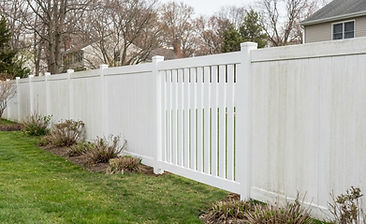
Fence Repair
Fence repairs, restoration and post replacement that bring a failing fence back to square and solid.
View Service
 02
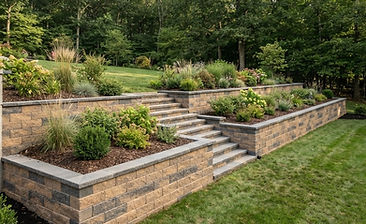
Retaining Walls
Retaining wall construction designed to control erosion, support landscaping, and improve the structure and appearance of outdoor spaces.
View Service
 03
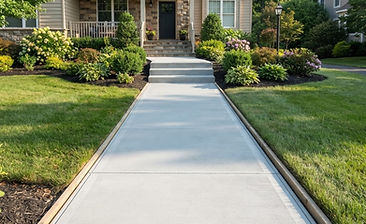
Concrete Sidewalks
Concrete sidewalk installation built for safety, longevity, and compliance with local standards.
View ServiceRelated work in neighboring towns
Hackensack, NJ
Bergen County
Custom fence installation in Hackensack, from privacy runs to pool barriers, built on footings that hold.
Teaneck, NJ
Bergen County
Fence repair in Teaneck: leaning posts reset properly, gates re-hung, and storm damage matched to the original.
Wayne, NJ
Passaic County
Engineered retaining walls and terraced grade changes built for Wayne's sloped and lakefront properties.
Schedule an on-site visit
We come out, walk the property, check the grade and measure the actual dimensions before quoting. Serving Fort Lee and the rest of Bergen County since 2006.
Fence Installation in Fort Lee, done properly
Tell us what you are building, repairing or replacing in Fort Lee. We will walk the property, measure the actual run and give you a written quote with no obligation.